
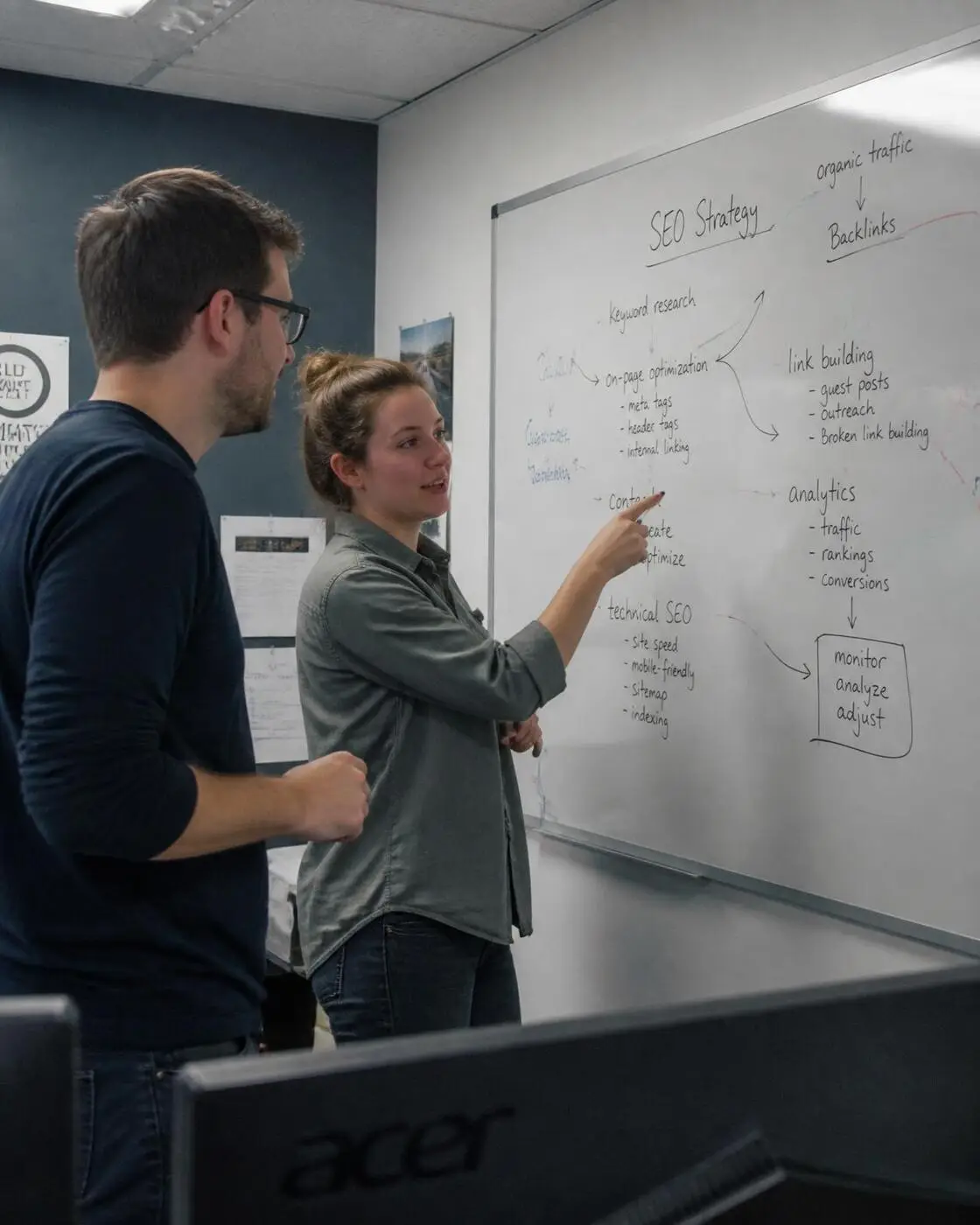
Semantic SEO moves beyond exact keywords, letting search engines understand meaning and context. It delivers richer results, higher click‑through rates, and
Semantic SEO moves beyond exact keywords, letting search engines understand meaning and context. It delivers richer results, higher click‑through rates, and stronger local relevance for Denver businesses.
Ever typed a query and felt the results were oddly generic? That’s often because search engines still rely on exact keyword matches, ignoring the nuance behind a user’s intent. In Colorado’s competitive digital landscape, that gap can mean missed traffic for local businesses.
The good news is that a newer approach, called semantic SEO, changes the game. By teaching search engines the meaning behind your content, you can earn richer snippets, improve local visibility across Denver, Aurora, and surrounding towns, and ultimately attract more qualified visitors.
Key Takeaways
Semantic SEO aligns your site with how modern search engines interpret meaning, boosting local visibility and rich results. Implement structured data, entity mapping, and natural language to stay ahead.
- Entity Mapping: Build a clear map of core topics and related entities so search engines can see the full context of your services.
- Structured Data: Add JSON‑LD markup for LocalBusiness, Service, and FAQ types to unlock rich snippets and knowledge panels.
- Content Depth: Aim for comprehensive, topic‑cluster pages that cover sub‑questions, not just single‑keyword pages.
- Natural Language: Write for people, using synonyms and conversational phrasing, which helps AI‑driven search understand intent.
- Continuous Audits: Regularly validate markup with Google’s structured data tools and adjust for schema updates to maintain eligibility.
Why Search Engines Now Prioritize Topic Context Over Exact Keywords
Search engines have evolved from simple keyword matchers to meaning‑hunters. They analyze the surrounding topic, user intent, and entity relationships to decide which page best satisfies a query. In Denver’s diverse market, a business that only optimizes for isolated keywords often gets drowned out by broader, context‑rich sites.
Understanding this shift is crucial for local owners who want to appear in the ‘near me’ results. When a query mentions ‘plumbing services in Aurora,’ the engine looks for pages that discuss plumbing, local service areas, and related concepts, not just the exact phrase.
A quick comparison of keyword‑centric versus context‑centric optimization approaches:
| Approach | Primary Focus | Typical Outcome |
|---|---|---|
| Keyword‑Centric | Exact match terms | Limited visibility, high bounce |
| Context‑Centric | Topic clusters and entities | Broader SERP presence, higher CTR |
| Hybrid | Keywords plus related entities | Balanced traffic, steady rankings |
Core Shifts
- Contextual Signals: Search engines weigh surrounding text, headings, and linked entities to gauge relevance, so a page about ‘water‑saving fixtures’ can rank for ‘eco‑friendly plumbing.’
- User Intent Modeling: Algorithms predict the goal behind a query before the user finishes typing, favoring pages that address the broader need rather than a single keyword.
- Entity Recognition: Recognizing brands, places, and services as distinct entities lets the engine match queries like ‘Denver roof repair’ to a local business schema.
- Semantic Relationships: Linking related concepts, such as ‘energy efficiency’ and ‘HVAC maintenance’,helps the engine see a network of relevance, boosting authority.
- Algorithm Updates: Recent updates reward sites that provide comprehensive answers, meaning thin keyword‑focused pages lose ground to richer, topic‑wide content.
In practice, this means you should design content around whole topics, not isolated phrases. By embedding related entities and natural language, you give search engines the clues they need to surface your site for a wider range of local queries.
The Entity Relationship Map That Most SEO Audits Miss Completely
Most SEO audits stop at backlinks and meta tags, overlooking how entities connect across a site. An entity relationship map visualizes these connections, showing how a service, a location, and a problem statement intertwine. For businesses in Denver, Aurora, and Boulder, this map can reveal hidden opportunities to rank for localized queries.
Creating the map starts with identifying core entities, your business name, service types, and target neighborhoods. Then you link them to related concepts like ‘energy‑saving’ or ‘seasonal maintenance.’ The result is a web of relevance that search engines can easily crawl and understand.
Mapping Essentials
- Core Entities: List primary business attributes such as name, address, and service categories using Schema.org types like LocalBusiness.
- Supporting Concepts: Add related topics, e.g., ‘water conservation’ for plumbing, to broaden semantic reach.
- Geographic Nodes: Tag each location (Denver, Aurora, etc.) with geo‑coordinates to improve local pack eligibility.
- Link Hierarchy: Connect pillar pages to cluster briefs, ensuring each entity appears in multiple contexts for stronger salience.
- Validation Loop: Use tools like Google’s Rich Results Test to confirm that entity markup is correctly recognized.
When you audit with this map in hand, gaps become obvious, missing schema on a service page or an unlinked location page can be fixed quickly, leading to richer results and more qualified traffic.
How Semantic Search Interprets User Intent Before the Query Finishes
Modern search engines predict intent as you type, using context clues from your location, recent searches, and the phrasing you start with. This predictive ability means a page that answers a broader need can surface even if the exact query hasn’t been fully entered. For a Denver homeowner searching for ‘best heating,’ the engine may already suggest local HVAC providers.
The key is to align your content with those early intent signals. By covering the full decision journey, from problem identification to solution comparison, you capture users at the moment they are forming their query.
Intent Alignment
- Early Keywords: Target phrases like ‘how to fix a leaky faucet’ that users type before they specify location, then add local modifiers in the content.
- Answer Boxes: Structure content to answer common questions directly, increasing chances of appearing in AI‑driven answer blocks.
- User Journey Mapping: Outline steps a user takes, from research to purchase, and create content for each stage, using natural language.
- Schema for FAQs: Implement FAQPage schema so search engines can pull concise answers for early‑stage queries.
- Local Signals: Mention nearby landmarks or neighborhoods early in the copy to signal geographic relevance.
By anticipating what a user wants before they finish typing, you position your site as the go‑to resource, boosting click‑through rates and reducing bounce.
What Wikipedia’s Internal Linking Structure Reveals About Semantic Connections
Wikipedia’s internal links are a masterclass in semantic connectivity. Each article links to related topics, creating a dense network that search engines can traverse. This structure shows how entities, people, places, concepts, are interrelated, providing a blueprint for building your own site map.
Applying a similar strategy to a local service site means linking service pages to related blog posts, case studies, and geographic pages. In Denver, a ‘roof repair’ page might link to a ‘snow load’ article, reinforcing the seasonal relevance.
Linking Blueprint
- Hierarchical Hubs: Use pillar pages as central hubs that link out to detailed cluster pages, mirroring Wikipedia’s top‑level articles.
- Cross‑Entity Links: Connect related services, e.g., ‘gutter cleaning’ to ‘roof inspection’,to signal thematic relevance.
- Geographic Anchors: Link city‑specific pages together, allowing crawlers to understand the regional ecosystem.
- Citation Style Links: Reference authoritative sources, such as the W3C semantic web standards, to boost credibility.
- Link Audits: Regularly review internal links for orphaned pages and broken connections that dilute entity strength.
A well‑structured internal linking system not only helps users navigate but also gives search engines a clear map of your semantic landscape, improving indexation and authority.
The Content Depth Threshold Where Semantic Relevance Actually Kicks In
Search engines start rewarding content once it reaches a certain depth, typically a few hundred words covering a topic comprehensively. Shallow pages that merely repeat a keyword fail to provide the context needed for semantic relevance. In the Denver market, a detailed guide on ‘winter lawn care’ can outperform a short paragraph on the same keyword.
Depth isn’t about word count alone; it’s about covering sub‑questions, providing examples, and linking to related concepts. When you meet this threshold, algorithms can confidently assign entity salience and display rich snippets.
Typical content depth metrics for semantic relevance:
| Metric | Minimum Threshold | Recommended Practice |
|---|---|---|
| Word Count | 300 words | Aim for 500‑800 words for pillar pages |
| Entity Count | 3 entities | Include at least 5 related entities per page |
| Internal Links | 2 links | Link to 3‑5 related pages for context |
Depth Checklist
- Comprehensive Coverage: Answer the main question and at least three related sub‑questions within the same page.
- Data and Examples: Include local statistics, such as average snowfall in Denver, to ground the content in real context.
- Multimedia Elements: Add images or videos with proper alt text and schema to enrich the page’s semantic signal.
- Internal References: Link to other relevant pages on your site, reinforcing the entity network.
- Schema Validation: Run the page through Google’s structured data testing tool to ensure markup aligns with the content depth.
Once you consistently produce deep, well‑linked content, search engines begin to treat your site as an authority on that topic, leading to higher rankings and richer SERP features.
Why Synonym Stuffing Fails Where Natural Language Variations Succeed
A common mistake is to cram synonyms into a page, hoping to capture every possible search term. Search engines now detect unnatural repetition and may penalize the page for keyword stuffing. Instead, write in a natural voice that naturally incorporates variations.
For a Denver‑based service, this means describing ‘HVAC repair’ as ‘heating and cooling fixes’ or ‘air‑conditioner service’ where appropriate. The result is a smoother read for users and a clearer semantic signal for crawlers.
Effective Variations
- Natural Synonyms: Use genuine alternatives like ‘maintenance’ and ‘service’ in separate sentences rather than forced repetitions.
- Contextual Phrases: Embed variations within real‑world scenarios, such as ‘when a furnace stops humming in winter.’
- Semantic Grouping: Group related terms under a single heading, allowing search engines to see the thematic cluster.
- User‑Focused Language: Write as if answering a friend’s question, which naturally introduces varied phrasing.
- Avoid Over‑Optimization: Keep keyword density low; focus on delivering value, and let the algorithm infer relevance.
By letting language flow naturally, you build trust with readers and give search engines the authentic context they need to rank your pages for a broader set of queries.
How Schema Markup Bridges the Gap Between Your Content and Search Understanding
Schema markup is the technical bridge that translates human‑readable content into machine‑readable data. When you annotate a page with JSON‑LD, you tell search engines exactly what each piece of information represents, be it a business address, service type, or FAQ answer. This clarity leads to rich results like star ratings and knowledge panels.
In the Denver area, adding LocalBusiness schema with accurate NAP (Name, Address, Phone) and geo‑coordinates can improve visibility in the ‘near me’ pack. Coupled with FAQPage or HowTo schema, you also increase the chance of appearing in AI‑driven answer boxes.
Markup Best Practices
- JSON‑LD Preference: Use JSON‑LD placed in the page head for easy maintenance and minimal impact on visual layout.
- Accurate NAP: Ensure name, address, and phone match exactly across all local listings and schema.
- Rich Types: Implement LocalBusiness, Service, FAQPage, and HowTo types to cover the full range of user intents.
- SameAs Links: Connect your Business to authoritative sources like Wikipedia or the city’s official website for credibility.
- Validation Routine: Run each page through Google’s structured data testing tool after updates to catch errors early.
When schema is correctly deployed, search engines can surface your content in more engaging formats, driving higher click‑through rates and reinforcing your presence across Denver, Aurora, and the surrounding market.
Elevating Local Search with Semantic SEO
Semantic SEO reshapes how your site communicates with search engines, turning simple keyword lists into rich, entity‑driven narratives that resonate with Denver, Aurora, and the broader Colorado audience. By mapping entities, deepening content, and deploying precise schema, you unlock richer SERP features and attract more qualified visitors.
Next steps include auditing your current pages for entity gaps, adding JSON‑LD markup for local services, and building topic clusters that answer real user questions. Implement these tactics, monitor results in Google Search Console, and iterate for continued growth.
Author
Bradley Johnson is a seasoned SEO strategist with over 17 years of experience helping Colorado businesses improve online visibility. His background in internet marketing and hands‑on work with semantic techniques gives him a practical edge in translating complex concepts into actionable site improvements.
About the author
Bradley Johnson is a seasoned SEO strategist who has helped Colorado businesses translate analytics into higher local search rankings. His background in paid search and web design gives him a practical perspective on turning data into actionable profile improvements.