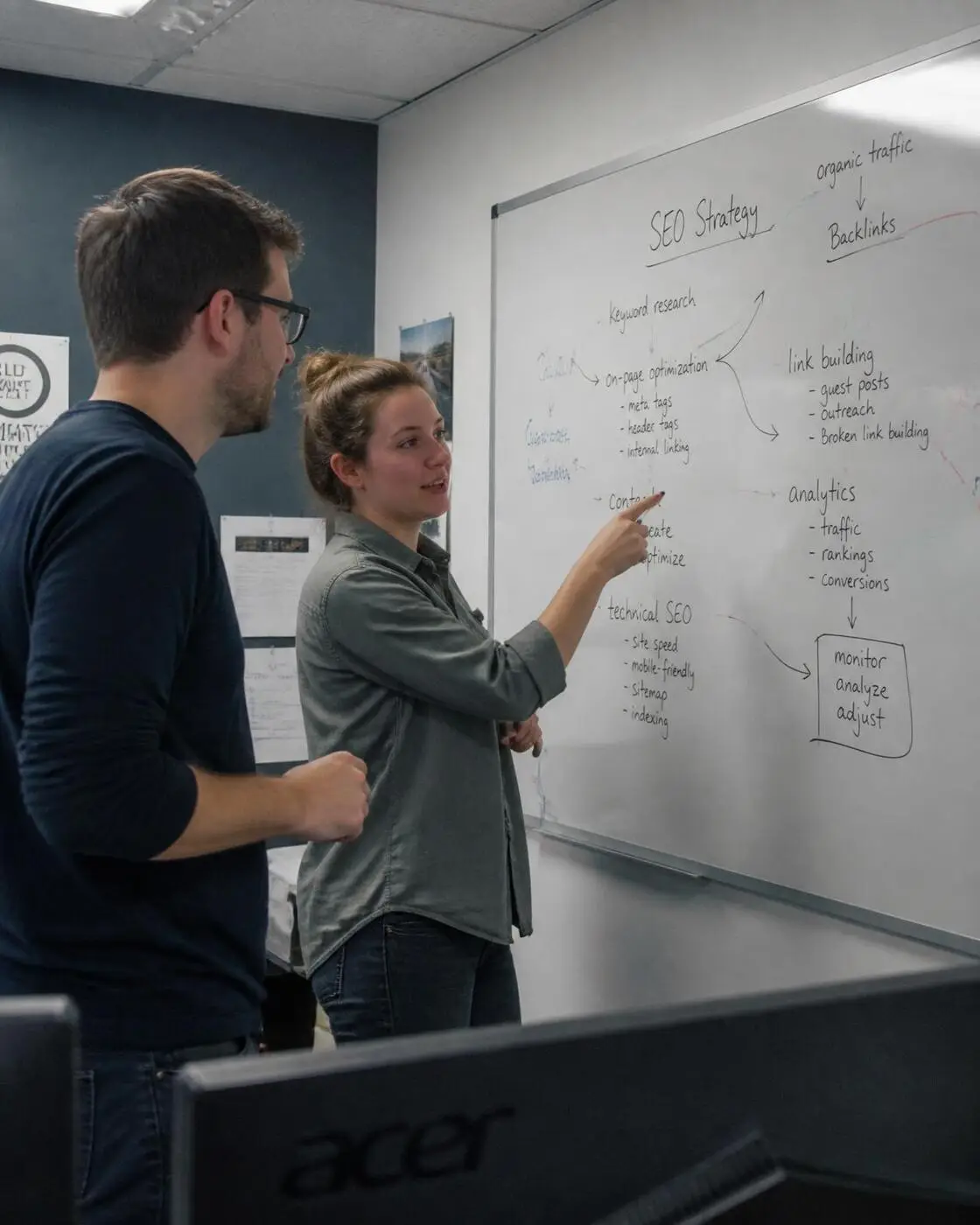

AI is reshaping search behavior and content creation, but strategic SEO thinking remains irreplaceable. Smart businesses combine both approaches for maximum
AI is reshaping search behavior and content creation, but strategic SEO thinking remains irreplaceable. Smart businesses combine both approaches for maximum visibility.
You’ve probably heard the predictions: artificial intelligence will make SEO obsolete, chatbots will replace Google searches, and content creators will lose their jobs to algorithms. The reality is far more nuanced than these dramatic headlines suggest. While AI is undeniably changing how people discover information and how search engines process content, it’s creating new opportunities rather than eliminating the need for strategic optimization.
The businesses thriving in Denver, Colorado understand this shift isn’t about replacement but evolution. They’re discovering that AI tools can handle repetitive tasks like keyword research and content drafts, but the strategic thinking behind successful search engine optimization requires human insight, local market knowledge, and the ability to interpret complex data patterns. This transformation demands a new approach that combines AI efficiency with human expertise.
Key Takeaways
- Strategic Evolution: AI transforms SEO workflows by automating repetitive tasks while amplifying the importance of human strategic thinking, data interpretation, and creative problem-solving for search visibility success.
- Content Quality Gap: Machine-generated content often lacks the nuanced understanding of user intent, local context, and authentic expertise that search engines increasingly prioritize for ranking and user satisfaction.
- Technical Complexity: SEO audits require contextual analysis, business understanding, and strategic prioritization that AI cannot replicate, making human expertise essential for meaningful optimization recommendations and implementation.
- Local Market Intelligence: Businesses in Denver, Colorado need professionals who understand regional search patterns, local competition dynamics, and community-specific content opportunities that AI tools cannot effectively identify or leverage.
- Future-Ready Approach: The most successful SEO strategy combines AI tools for efficiency with human oversight for quality, ensuring content meets both algorithmic requirements and genuine user needs.
Why AI Will Augment SEO Strategy Rather Than Replace It
The fear that AI will completely replace SEO professionals stems from a fundamental misunderstanding of what effective optimization actually involves. While AI excels at processing vast amounts of data and identifying patterns, search engine optimization success depends on understanding business goals, interpreting user behavior, and making strategic decisions that align with both algorithmic requirements and human psychology. AI can tell you which keywords are trending, but it can’t determine whether those keywords align with your business objectives or customer journey.
Consider how businesses across Denver, Colorado are adapting to this reality. They’re using AI tools to streamline keyword research, generate content outlines, and analyze competitor data, but they still rely on human expertise to interpret results, develop content strategies, and make tactical decisions. This hybrid approach allows teams to work more efficiently while maintaining the strategic oversight that drives real results. The companies seeing the biggest wins aren’t choosing between AI and human expertise but combining both for maximum impact.
Integration Benefits
- Efficiency Amplification: AI handles time-consuming data collection and basic analysis, freeing professionals to focus on strategy development, creative problem-solving, and high-level optimization decisions.
- Pattern Recognition: Machine learning algorithms identify trends and correlations in search data that humans might miss, providing insights that inform better strategic choices and tactical implementations.
- Scale Enhancement: Automated tools enable optimization across larger content libraries and keyword sets, while human oversight ensures quality and strategic alignment with business objectives.
- Speed Advantage: AI accelerates research phases and content production timelines, allowing teams to respond more quickly to algorithm updates and market changes without sacrificing quality.
- Resource Optimization: The combination reduces manual workload while improving output quality, creating cost efficiencies that allow businesses to invest more in strategic initiatives and creative development.
This partnership model is already proving successful for businesses that understand AI’s limitations and strengths. Rather than viewing AI as a threat, forward-thinking companies are treating it as a powerful assistant that enhances human capabilities. The result is more efficient workflows, better data insights, and strategies that combine the best of both technological capability and human creativity.
The Critical SEO Tasks AI Still Can’t Handle in 2024
Despite impressive advances in machine learning and natural language processing, several core SEO functions remain beyond AI’s current capabilities. Strategic decision-making, contextual understanding, and creative problem-solving require human insight that algorithms simply cannot replicate. When businesses in Denver, Colorado encounter complex optimization challenges, they need professionals who can analyze multiple variables, understand business constraints, and develop solutions that balance technical requirements with practical implementation realities.
The gap becomes most apparent when dealing with ambiguous situations, conflicting data, or unique business circumstances. AI tools excel at following established patterns and processing clear inputs, but they struggle with nuanced interpretation, creative solutions, and strategic prioritization. These limitations become critical when businesses need to make decisions about resource allocation, content strategy, or technical implementations that could significantly impact their search visibility and overall success.
Human-Only Capabilities
- Strategic Prioritization: Determining which optimization opportunities deserve immediate attention based on business goals, resource constraints, and potential impact requires contextual understanding that AI cannot provide.
- Creative Problem-Solving: Developing innovative solutions for unique technical challenges, competitive situations, or algorithm penalties demands human creativity and lateral thinking that machines cannot replicate effectively.
- Stakeholder Communication: Explaining complex SEO concepts, justifying strategic decisions, and managing client expectations requires emotional intelligence and communication skills that remain uniquely human capabilities.
- Ethical Decision-Making: Navigating gray areas in optimization tactics, balancing aggressive strategies with long-term sustainability, and making ethical choices about content and linking practices requires moral judgment.
- Business Context Integration: Understanding how SEO decisions impact broader business objectives, brand positioning, and customer experience requires holistic thinking that considers factors beyond search rankings.
These human-centric capabilities become more valuable as AI handles routine tasks. Professionals who develop these skills position themselves as strategic partners rather than tactical executors. The businesses that recognize and invest in these distinctly human capabilities will maintain competitive advantages that pure technology cannot replicate.
How Machine Learning Already Powers Google’s Ranking Algorithm Updates
Google’s algorithm has been incorporating machine learning elements for years, with systems like RankBrain, BERT, and MUM fundamentally changing how search results are determined. These AI-powered components analyze user behavior, understand content context, and evaluate page quality in ways that traditional algorithmic approaches couldn’t achieve. According to Google Search Central Documentation, these systems process queries and content with increasing sophistication, making it crucial for SEO professionals to understand how machine learning impacts search visibility.
The integration of AI into Google’s ranking systems means that optimization strategies must evolve beyond traditional keyword targeting and link building. Modern algorithms can understand semantic relationships, user intent, and content quality at levels that require more nuanced approaches to optimization. Businesses across Denver, Colorado are discovering that success now depends on creating content that satisfies both algorithmic analysis and genuine user needs, requiring a deeper understanding of how AI evaluates and ranks content.
Algorithm Components
- RankBrain Processing: Google’s machine learning system interprets ambiguous queries and matches them with relevant content based on semantic understanding rather than exact keyword matching alone.
- BERT Language Understanding: Natural language processing capabilities allow Google to understand context, nuance, and conversational queries, making content relevance more important than keyword density.
- Core Web Vitals Integration: AI systems evaluate page experience signals including loading speed, interactivity, and visual stability as ranking factors that impact user satisfaction and search positions.
- Content Quality Assessment: Machine learning algorithms analyze content depth, expertise signals, and user engagement patterns to determine whether pages provide valuable information that meets search intent.
- Behavioral Signal Analysis: AI systems monitor user interactions, click-through rates, and engagement metrics to refine understanding of what constitutes high-quality, relevant search results.
Understanding these AI-powered systems helps SEO professionals develop strategies that align with how modern search engines actually work. Rather than trying to manipulate algorithmic weaknesses, successful optimization focuses on creating content and experiences that satisfy both machine evaluation and human needs. This approach ensures long-term sustainability as AI systems continue evolving.
Where AI-Generated Content Falls Short of Search Intent Requirements
While AI can produce grammatically correct content at impressive speed, it often misses the subtle understanding of user intent that drives successful search optimization. Machine-generated content frequently lacks the depth of expertise, local relevance, and authentic perspective that search engines increasingly prioritize. When businesses attempt to scale content production using purely AI-generated material, they often discover that quantity doesn’t translate to quality rankings or user engagement.
The challenge becomes particularly apparent when creating content for specific markets like Denver, Colorado, where local context, regional preferences, and community understanding play crucial roles in content effectiveness. AI tools can research general information about topics, but they cannot replicate the nuanced understanding that comes from real experience, local market knowledge, or genuine expertise in specific fields. This limitation creates opportunities for businesses that invest in human-created or human-enhanced content.
Content Limitations
- Expertise Authenticity: AI cannot replicate genuine professional experience, real-world problem-solving insights, or the nuanced understanding that comes from years of hands-on work in specific industries.
- Local Context Missing: Machine-generated content lacks understanding of regional preferences, local market conditions, and community-specific needs that make content truly relevant to target audiences.
- Depth Deficiency: While AI can cover topics broadly, it often misses the detailed insights, edge cases, and practical considerations that demonstrate true expertise and provide real value.
- Intent Misinterpretation: Automated content generation frequently misunderstands the specific questions users are trying to answer, leading to content that ranks poorly despite technical optimization.
- Authenticity Signals: Search engines are developing better detection methods for AI-generated content, potentially penalizing sites that rely too heavily on automated content creation without human oversight.
The most successful content strategies combine AI efficiency with human expertise, using automation for research and initial drafts while ensuring human professionals add depth, authenticity, and strategic insight. This approach satisfies both search engine requirements for quality content and user expectations for valuable, trustworthy information.
The Human Expertise Gap That Keeps SEO Professionals Irreplaceable
The value of SEO professionals extends far beyond technical knowledge of ranking factors and optimization tactics. Human experts bring contextual understanding, creative problem-solving abilities, and strategic thinking that AI cannot replicate. They can interpret complex data patterns, understand business implications, and make decisions that balance multiple competing priorities. This multifaceted expertise becomes more valuable as AI handles routine tasks, allowing professionals to focus on high-level strategy and creative solutions.
Businesses across Denver, Colorado are discovering that the most successful SEO initiatives combine technical proficiency with strategic insight, creative thinking, and deep understanding of user behavior. Professional expertise includes the ability to adapt strategies based on changing circumstances, interpret conflicting data, and develop innovative approaches to unique challenges. These capabilities require human judgment, experience, and the ability to think beyond established patterns and algorithms.
Here’s how human expertise compares to AI capabilities across critical SEO functions:
| SEO Function | AI Capability | Human Expertise | Best Approach |
|---|---|---|---|
| Strategic Planning | Data analysis | Goal alignment | AI insights + human strategy |
| Content Creation | Draft generation | Expertise & authenticity | AI drafts + human enhancement |
| Technical Audits | Issue identification | Prioritization & solutions | AI detection + human analysis |
| Link Building | Prospect research | Relationship building | AI research + human outreach |
| Performance Analysis | Data processing | Strategic interpretation | AI reporting + human insights |
Irreplaceable Skills
- Strategic Vision: Developing long-term optimization strategies that align with business goals, market conditions, and competitive landscapes requires forward-thinking analysis that AI cannot provide.
- Creative Innovation: Finding unique approaches to difficult optimization challenges, developing original content angles, and creating differentiated strategies demands human creativity and lateral thinking capabilities.
- Contextual Interpretation: Understanding how multiple data sources relate to specific business situations, market conditions, and user behavior patterns requires nuanced analysis beyond algorithmic processing.
- Relationship Building: Developing partnerships for link building, content collaboration, and industry connections requires interpersonal skills and trust-building that remain uniquely human capabilities.
- Adaptive Learning: Quickly adjusting strategies based on algorithm updates, market changes, or unexpected results requires flexible thinking and rapid problem-solving that machines cannot match.
These distinctly human capabilities become competitive advantages as AI democratizes basic SEO tasks. Professionals who cultivate these skills position themselves as strategic partners rather than technical implementers. The businesses that recognize and invest in human expertise alongside AI tools will maintain sustainable competitive advantages in an increasingly automated landscape.
Why Technical SEO Audits Require Strategic Thinking Beyond AI Capabilities
Technical SEO audits involve much more than identifying crawl errors or page speed issues. They require understanding business priorities, resource constraints, and the potential impact of various optimization opportunities. While AI tools can efficiently scan websites and flag technical problems, they cannot prioritize fixes based on business context, determine implementation feasibility, or develop strategic approaches that balance technical perfection with practical limitations. This gap makes human expertise essential for meaningful audit outcomes.
The complexity increases when dealing with large websites, complex technical infrastructures, or unique business requirements. Professional auditors must consider factors like development resources, budget constraints, potential traffic impact, and implementation timelines when making recommendations. According to industry insights from Search Engine Journal, successful technical optimization requires strategic thinking that considers both immediate fixes and long-term technical debt management.
Strategic Requirements
- Priority Assessment: Determining which technical issues deserve immediate attention based on potential traffic impact, implementation difficulty, and available resources requires business understanding beyond algorithmic analysis.
- Implementation Planning: Developing realistic timelines and resource allocation for technical fixes requires understanding of development processes, team capabilities, and business constraints that AI cannot assess.
- Risk Evaluation: Assessing potential negative impacts of technical changes, understanding rollback procedures, and managing implementation risks requires experience-based judgment and strategic thinking.
- Resource Optimization: Balancing technical perfection with practical limitations, identifying quick wins versus long-term projects, and maximizing ROI on technical investments requires strategic prioritization skills.
- Cross-Functional Coordination: Managing technical SEO projects across development, design, and marketing teams requires communication skills and project management expertise that remain uniquely human capabilities.
The most valuable technical SEO audits combine AI-powered issue detection with human strategic analysis and practical implementation guidance. This approach ensures that technical recommendations are not only accurate but also actionable within real-world business constraints. Companies that understand this distinction achieve better results from their technical optimization efforts.
The Future SEO Role: Data Interpreter, Not Keyword Researcher
The SEO profession is evolving from tactical execution to strategic analysis and interpretation. As AI handles routine tasks like keyword research, competitor analysis, and basic content optimization, human professionals are becoming data interpreters, strategic advisors, and creative problem solvers. This shift requires new skills focused on understanding complex data relationships, identifying strategic opportunities, and translating insights into actionable business strategies that drive meaningful results.
Businesses in Denver, Colorado are already seeing this transformation as successful SEO professionals focus more on strategic consulting and less on tactical implementation. The future role involves synthesizing information from multiple AI tools, interpreting complex data patterns, and developing comprehensive strategies that align with business objectives. According to Search Engine Journal, this evolution makes SEO professionals more valuable as strategic partners rather than technical implementers.
The transformation of SEO roles from tactical to strategic responsibilities:
| Traditional Role | AI Impact | Future Focus | Required Skills |
|---|---|---|---|
| Keyword Research | Automated by AI | Intent Analysis | Strategic thinking |
| Content Writing | AI-assisted drafting | Quality Enhancement | Expertise validation |
| Technical Audits | Issue detection | Strategic prioritization | Business analysis |
| Competitor Analysis | Data collection | Insight interpretation | Pattern recognition |
| Reporting | Automated dashboards | Strategic recommendations | Data storytelling |
Evolving Responsibilities
- Data Synthesis: Combining insights from multiple AI tools and data sources to develop comprehensive understanding of market opportunities, competitive landscapes, and optimization potential.
- Strategic Consulting: Advising businesses on long-term SEO strategies that align with broader marketing goals, brand positioning, and customer acquisition objectives rather than just ranking improvements.
- Performance Interpretation: Analyzing complex performance data to identify trends, opportunities, and potential issues that require strategic adjustments or tactical changes in optimization approaches.
- Innovation Development: Creating new approaches to optimization challenges, developing unique content strategies, and finding creative solutions to competitive or technical obstacles that AI cannot address.
- Quality Assurance: Ensuring AI-generated content and recommendations meet quality standards, align with brand guidelines, and provide genuine value to users and search engines alike.
This evolution creates opportunities for SEO professionals to become more strategic and valuable within organizations. Those who adapt to this changing role will find themselves positioned as essential strategic partners who drive business growth through data-driven insights and creative problem-solving. The key is embracing AI as a tool while developing the uniquely human skills that complement technological capabilities.
Embracing AI-Enhanced SEO Strategy
The question isn’t whether AI will replace SEO, but how smart businesses will combine both to achieve superior results. Companies across Denver, Colorado that embrace this hybrid approach are already seeing competitive advantages through improved efficiency, better data insights, and more strategic optimization decisions. The future belongs to organizations that leverage AI tools for routine tasks while investing in human expertise for strategic thinking, creative problem-solving, and authentic content creation.
If you’re ready to develop an SEO strategy that combines AI efficiency with human expertise, we can help you navigate this evolving landscape. Our approach integrates the latest AI tools with proven strategic thinking to deliver results that satisfy both search engines and your target audience, ensuring your business stays competitive in the changing world of search optimization.
Author
Bradley Johnson brings over 17 years of SEO and digital marketing expertise to the evolving intersection of AI and search optimization. His Master’s in Internet Marketing and extensive experience with algorithm changes provide unique insights into how businesses can successfully adapt to AI-enhanced search landscapes. Bradley specializes in helping companies integrate AI tools while maintaining the strategic human oversight that drives sustainable SEO success.
About the author
Bradley Johnson is a seasoned SEO strategist who has helped Colorado businesses translate analytics into higher local search rankings. His background in paid search and web design gives him a practical perspective on turning data into actionable profile improvements.